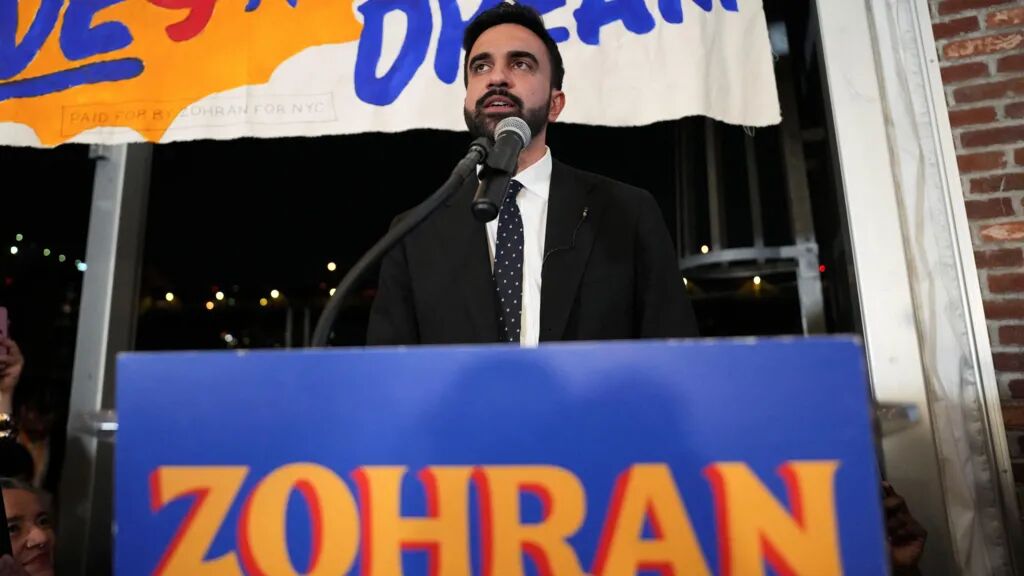
NEW YORK CITY – In a stunning political upset, 33-year-old state lawmaker Zohran Mamdani defeated former Governor Andrew Cuomo in the Democratic primary for New York City mayor, reshaping the city’s political landscape overnight.
Mamdani, a democratic socialist from Queens, launched a low-budget, high-energy campaign that leaned heavily on grassroots organizing and social media to reach voters. His message, centered on economic justice, city-run services, and free public transportation, resonated with young and disaffected voters across boroughs.
On primary night, he celebrated with supporters who had spent months knocking on doors, sharing videos, and building what became the largest volunteer army in the race. Nearly 50,000 volunteers reportedly joined his campaign effort.
“I’m doing this because New Yorkers deserve a mayor they can see, hear, and even yell at,” Mamdani said in a viral video filmed during a 7.5-hour walk from Harlem to Wall Street. That video, viewed over 12 million times across platforms, captured his unfiltered campaign style and set him apart from traditional candidates.
Mamdani entered the race polling at just 1%. Cuomo dismissed his platform as impractical and attacked his proposals including city-owned grocery stores and free transit as unrealistic. But Mamdani’s direct communication with voters and unpolished, honest tone quickly gained momentum online and on the streets.
Harris Krizmanich, a 30-year-old Manhattan resident, said Mamdani’s message convinced him to volunteer. “He treats people with respect. He speaks plainly. And he actually listens,” Krizmanich said. “That’s what made me believe he could win.”
Mamdani ran without major financial backers. Instead, he relied on small donations and consistent digital outreach. His campaign broke fundraising records through grassroots support, not large checks. A heated moment at a televised debate, where Mamdani directly criticized Cuomo’s scandals and record, helped solidify his rise.
Despite Mamdani’s growing popularity among Gen Z and younger millennial voters, exit polls showed Cuomo retained stronger support among older and lower-income residents. Cuomo carried voters earning under $40,000 by 11 points. Mamdani’s biggest margins came from precincts with higher youth turnout.
New York City’s current mayor, Eric Adams, dismissed Mamdani’s win. “He’s a snake oil salesman,” Adams said after the results were announced. Earlier this month, Adams had acknowledged, “I don’t agree with his views, but he stays true to who he is.”
Mamdani’s identity an immigrant, a Muslim, and an open democratic socialist connected with communities often sidelined in local politics. He framed his campaign around dignity, inclusion, and what he described as “basic needs made public.”
“People are tired of being promised safety while struggling to afford rent or food,” Mamdani said at a campaign event days before the election. “They want someone who will fight, not just talk.”
Analysts now say the primary result signals a broader shift within the Democratic Party. Voters appear ready to embrace candidates who challenge party norms and reject corporate influence.
“This isn’t just about beating Cuomo,” said one analyst close to the campaign. “This is about building a new political base—young, principled, and unafraid.”
Mamdani still faces a general election in November, where Adams is running as an independent. If elected, Mamdani would become New York’s first Muslim mayor and one of the youngest in the city’s history.
Now, the challenge will be turning bold promises into policy. And for Mamdani, the real test lies ahead: whether he can govern as effectively as he campaigned.
About the Author