LONDON — Nearly 138 million children were still engaged in child labour last year, according to a new global estimate by the United Nations. While that number reflects hard-won progress down by 20 million since 2020 it falls well short of promises made.
The joint report from the International Labour Organization (ILO) and UNICEF, released ahead of World Day Against Child Labour, paints a mixed picture. Since the turn of the century, child labour has almost halved. But with the 2025 elimination goal looming, the pace of change is simply too slow.

“The findings of our report offer hope and show that progress is possible,” said ILO Director-General Gilbert F. Houngbo. “But we must not be blindsided by the fact that we still have a long way to go.”

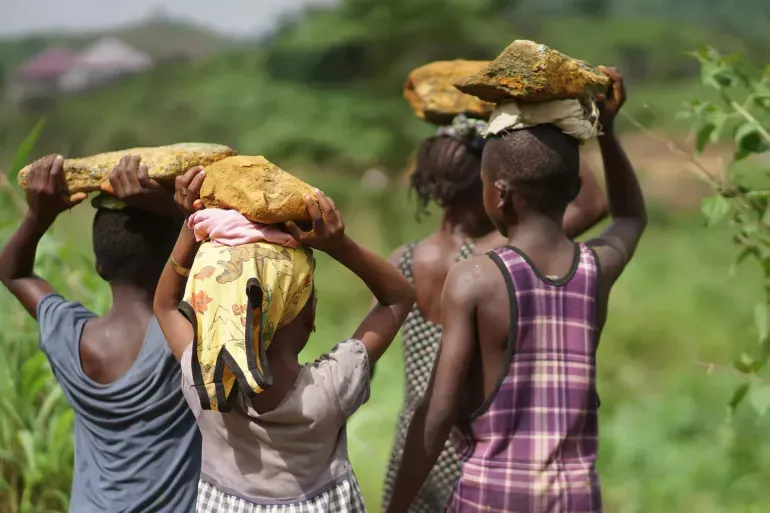
Children in child labour are often denied education, safety, and the freedom to simply play. Among the 138 million affected, around 54 million are stuck in hazardous jobs that risk their health and development.
Farming, Not Factories, Drives the Crisis
Agriculture remains the biggest contributor, accounting for 61 per cent of all child labour. This includes children working on family farms, often in remote areas where schools are few and public services are thin. The rest are found in services such as street vending and domestic work (27 per cent), and in industry including mining and manufacturing at 13 per cent.

The regional breakdown is revealing. Asia and the Pacific have seen the sharpest decline, with child labour halving in percentage terms from 6 per cent to 3 per cent. In contrast, sub-Saharan Africa still shoulders the highest burden. Some 87 million children almost two-thirds of the global total are working across the region.
Although the rate there dropped slightly from 24 to 22 per cent, population growth has kept the total number flat.

“Far too many children continue to toil in mines, factories, or fields,” said UNICEF Executive Director Catherine Russell. “Often in dangerous conditions, just to survive.”
She added that cutting funds for education and social protection would risk “rolling back hard-earned gains.”
Hard Truths Behind the Numbers
One of the root causes is poverty. Families struggling to meet basic needs often send children to work out of desperation. In many cases, it’s a choice between schoolbooks and supper.

Education remains a critical line of defence. Where schools are free, safe, and accessible, child labour tends to fall. But in conflict zones, rural areas, and communities battered by climate shocks, classrooms are either shuttered or overcrowded.
Boys are more likely than girls to be in formal child labour, but when unpaid domestic chores are counted especially those exceeding 21 hours per week girls take the lead.
And while child labour is down globally, the current pace of progress won’t come close to meeting the 2025 target. According to the UN agencies, rates would need to increase elevenfold to end the practice in the next five years.
What Needs to Change
To stem the tide, the ILO and UNICEF are urging governments to act on several fronts:

- Expand social protection: Universal child benefits and safety nets help families avoid sending children to work.
- Strengthen child protection systems: Frontline services can identify and rescue children at risk.
- Guarantee quality education: Especially in rural or crisis-affected areas.
- Support decent jobs for adults: Parents with fair wages are less likely to depend on their children’s labour.
- Hold businesses accountable: Especially across supply chains where exploitation can thrive unseen.
But advocates warn: without sustained global funding and political will, recent progress could quickly unravel.
“The tools exist,” said Houngbo. “But what’s needed now is the courage to use them urgently, and everywhere.”
About the Author