At the Jordanian Border — The sound was soft, almost fading into the wind. But it was unmistakably the cry of a baby a frail protest from a child still clinging to life.
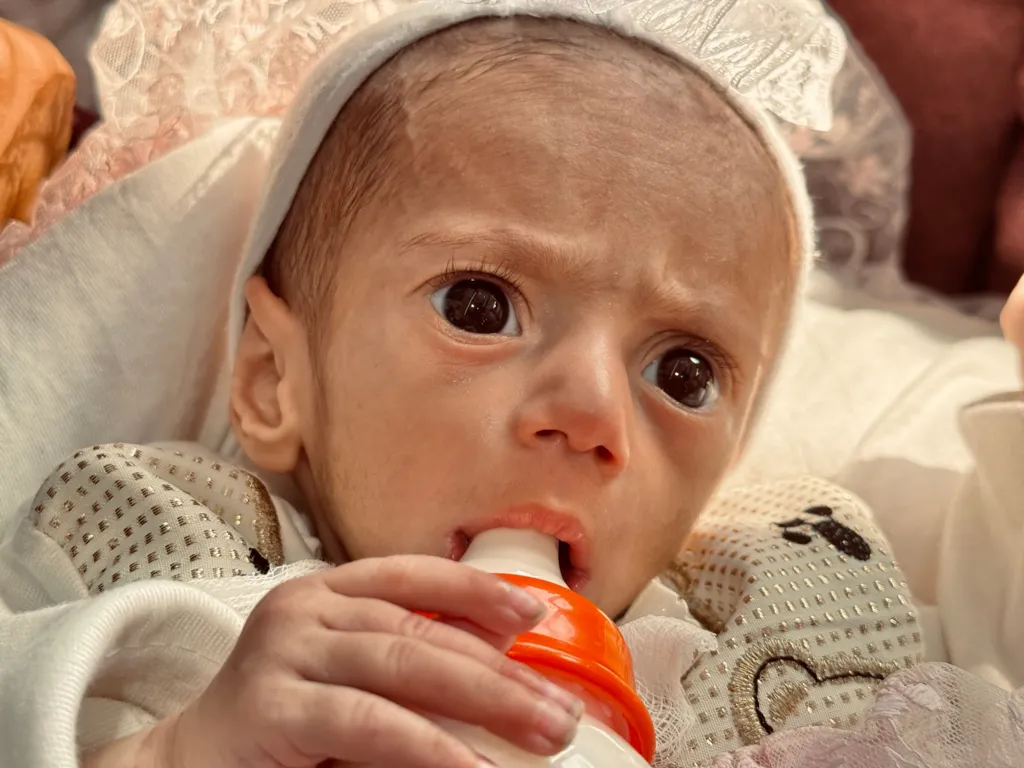
That cry belonged to six-month-old Siwar Ashour.
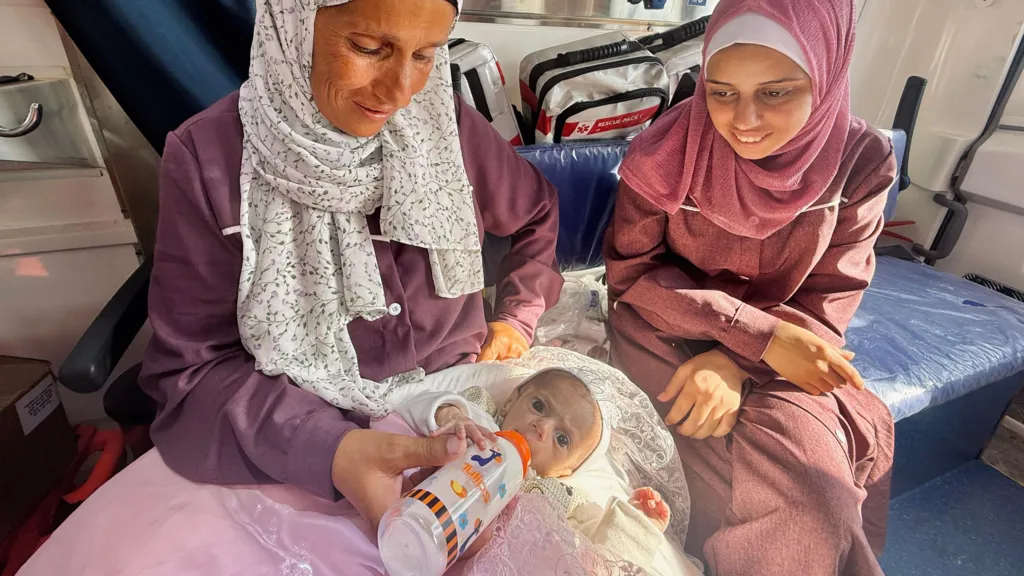
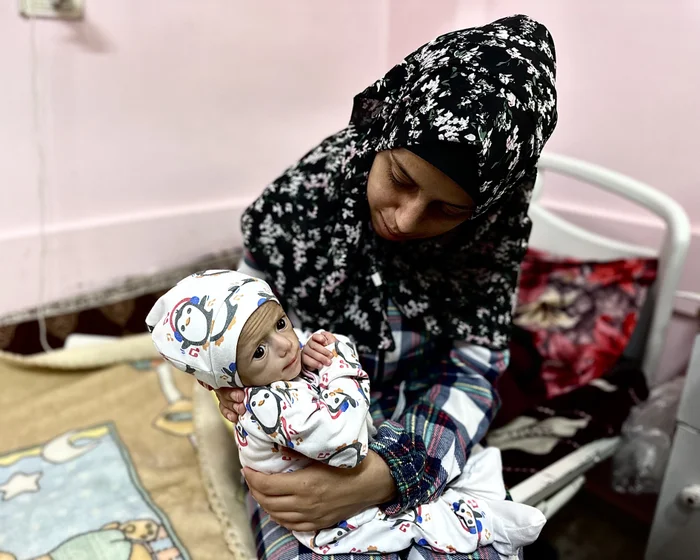
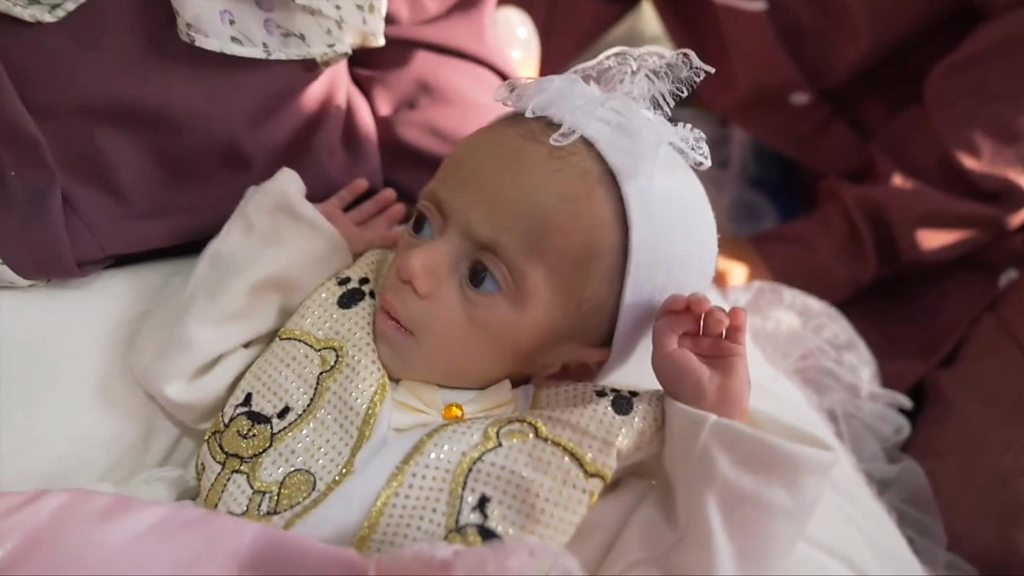
On Wednesday, she was among a group of gravely ill children evacuated from Gaza into Jordan. Her body is tiny just 3kg, less than half what a baby her age should weigh. But she is here. Alive.
Her mother, Najwa, stepped off the bus and into silence. For the first time in months, she said, she couldn’t hear the bombs.
“It feels like there is a truce,” she told me quietly, cradling her daughter. “We will spend the night without rockets and bombing with God’s will.”
Their journey, long and uncertain, began weeks ago. Siwar had been wasting away in a southern Gaza hospital. Her mother couldn’t breastfeed she was malnourished herself and the baby formula Siwar desperately needed was nearly impossible to find under the Israeli blockade.
Tins of formula eventually arrived, thanks to private donations and Jordan’s field hospital. But Siwar needed more than stopgap help. She needed full-scale care the kind Gaza’s shattered health system can no longer provide.
That help finally came as part of a humanitarian agreement announced in February between Jordan’s King Abdullah and then-U.S. President Donald Trump. The plan: evacuate 2,000 critically ill Palestinian children from Gaza to Jordanian hospitals.
So far, 57 children and their families have made it out. On Wednesday, 16 more, including Siwar, crossed the border. Her grandmother Reem, who carried her from the bus, flashed a V for victory as she stepped onto Jordanian soil.
“I saw the King’s photo at the border,” she said. “And I felt joy. I made the sign of victory… for Siwar.”
Siwar’s father, Saleh, who is blind, also made the journey. “The first and last goal of this trip is Siwar,” he told me. “I want her to be safe. To be healed. She is my daughter, my own flesh and blood. I’m so deeply worried for her.”
The family entered a large air-conditioned hall where Jordanian medics handed out bottled drinks and meals to the children. It was, for a moment, a scene of calm. But beneath it lay exhaustion. Parents slumped into chairs. Children dozed in their carers’ arms. Some were too weak to sit up.
Najwa, who is pregnant, soon drifted into sleep on the ambulance ride to Amman. Siwar stayed awake in her grandmother’s lap. In the same vehicle were two boys battling cancer, along with their mothers and young siblings. One toddler, barely four, cried through much of the trip. No one had the strength to hush him.
It was a quiet kind of trauma. The kind that lingers long after the shelling stops.
Many of these families have been displaced over and over again, driven from their homes by evacuation orders. Some have waited days for food. Others have buried children or neighbours. Nearly all have lived with the gnawing fear of being the next to die.
Saleh, the father, remembers when Najwa first left home with Siwar to seek treatment. He thought she would return in days. But days turned into weeks, and he began to realise how serious his daughter’s condition had become.
“I was shocked it dragged on so long,” he said. “And then I understood it’s much worse than I imagined.”
The war has left Gaza’s hospitals reeling. Supplies are scarce. Doctors are overwhelmed. Children like Siwar who might thrive under normal care are at risk of dying from hunger and treatable illness.
In Amman, Siwar will finally be tested properly and given the kind of treatment no longer available in her homeland. For her family, it is a moment of fragile hope.
They are not naive. They know many children won’t get out. They know many already haven’t.
But for now, they are safe. And that matters.
“She is still fighting,” Najwa said. “That’s all we can ask.”
About the Author