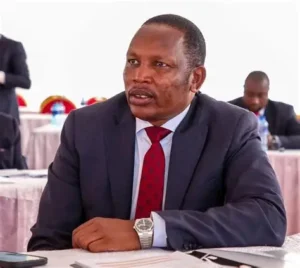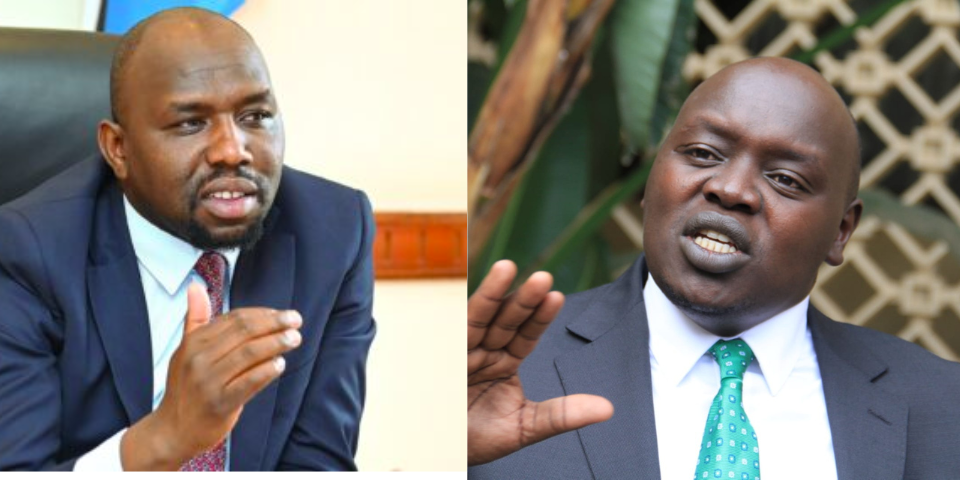
NAIROBI — A war of words broke out in Kenya’s Senate on Wednesday between Nandi Senator Samson Cherargei and Interior Cabinet Secretary Kipchumba Murkomen, exposing the deep and personal cracks within the country’s political elite.
The row flared up during a tense session where Murkomen, flanked by top police officials, appeared before the Senate to respond to questions over the murder of online influencer Albert Ojwang.
Senator Cherargei, long a vocal critic of the Interior Ministry, didn’t mince his words.
“The Ministry of Interior suffers from a leadership crisis. It’s good the nation has now seen Murkomen’s incompetence,” he said. “If anyone should resign, it’s him.”
He didn’t stop there. In a jab meant to sting, he added: “Maybe he should be moved to the Sports docket. He’s turned security into a joke.”
The remarks drew immediate backlash from Murkomen, who stood his ground with fire in his tone.
“Anyone can assess my performance, not Cherargei. This chamber is serious business,” he replied.
Then came the personal blow that stunned the chamber.
“Senator Cherargei was my student,” Murkomen claimed. “I taught him more than two subjects. His performance was below average.”
The comment drew gasps and scattered murmurs from fellow senators.
But Cherargei wasn’t having it. Hours later, he took to social media to deny the statement outright.
“For the record, CS Murkomen never taught me in any class of law,” he posted.
The spat has since drawn wide attention across the country. While some citizens saw it as petty politics, others said it reflected a serious lack of unity in handling key national issues like security and justice.
The two men have clashed before. In 2024, Murkomen filed a defamation suit against Cherargei after the senator accused him of involvement in corruption tied to Chinese investors. They’ve also exchanged words at funerals and during committee hearings, often locking horns over roads, tenders, and development delays.
But this time, their long-running rivalry took a deeply personal turn.
Murkomen has faced growing pressure over insecurity concerns and what critics call a slow response to recent crimes, including the Ojwang murder case. Cherargei has led calls for a probe and pushed for accountability at the highest levels.
While neither side has offered evidence to support their personal claims in this week’s exchange, the drama has once again raised questions about leadership, decorum, and focus in the halls of Kenya’s Senate.
Political analysts say both leaders risk distracting from the real issue.
“It’s unfortunate that rather than focusing on justice for Ojwang and public safety, leaders are resorting to name-calling,” said Dr Roselyn Mutua, a political analyst at the University of Nairobi.
As investigations into the influencer’s murder continue, Kenyans are left watching — some with concern, others with amusement — as political theatre overshadows policy debate.
About the Author