

Nairobi – In a sharp shift from last year’s tax-heavy approach, Kenya’s government has promised not to introduce any new taxes in its 2025 budget. Instead, it is betting on reforms to plug revenue gaps and rebuild public trust.
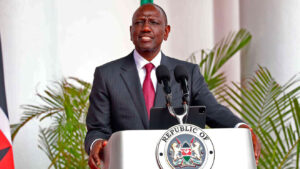
Treasury Cabinet Secretary John Mbadi delivered the announcement to Parliament on Wednesday, his first budget speech since taking office. It came against a backdrop of deep frustration following the 2024 Finance Act, which triggered mass protests and deadly clashes.
“The message from Kenyans was clear,” Mbadi said solemnly. “No life should be lost, and no property should be destroyed again.”
He paused to ask the House to honour victims of last year’s demonstrations with a moment of silence.
At the heart of the 2025 Finance Bill is a plan to raise Sh30 billion without touching current tax rates. Instead, the government hopes to collect the money through improved compliance, scaled-back tax incentives, and administrative reforms.
“Since I took office, I assured Kenyans we would work to ease the tax burden,” Mbadi told MPs. “This Finance Bill has not proposed new taxes, nor has it raised any rates.”
One key target is tax expenditure revenue lost through exemptions and incentives. That figure ballooned to Sh510.6 billion in 2023, up from Sh393.1 billion the year before. It now accounts for 3.4 percent of the country’s GDP.
The government aims to rein in those losses by streamlining incentives and plugging loopholes.
Digital Tax Cut to Woo the Youth
In a move likely to resonate with younger Kenyans, the Bill proposes cutting the digital asset tax from 3 percent to 1.5 percent. The government says the reduction is designed to encourage broader participation in online trading platforms and crypto markets.
“To encourage wider participation in virtual asset transactions, especially among the youth, the Bill proposes to reduce the digital asset tax,” Mbadi said.
The proposal follows criticism that last year’s tax discouraged innovation and pushed many digital entrepreneurs out of the formal economy.
Support for Local Business
The budget also offers a handful of breaks for key industries. Kenya has negotiated with East African Community partners to lower import duties on packaging materials and wheat moves aimed at cutting production costs for tea exporters and bakers.
“The meeting allowed Kenya to import tea packaging materials at a lower duty rate of 10 percent,” Mbadi told Parliament. “We also secured an extension of duty remission to import wheat at the same rate.”
He added that Kenya had dropped its earlier request to maintain high tariffs on some packaging goods, easing pressure on exporters.
New Incentives for Homebuilders
For homebuilders, there’s good news. Tax relief on mortgage interest, which previously applied only to buyers, will now include those constructing their own homes. The proposal is part of the government’s Affordable Housing drive under the Bottom-Up Economic Transformation Agenda (BETA).
“To ensure fairness, the Bill extends relief to individuals constructing their homes,” said Mbadi. “This supports our housing pillar.”
The daily allowance rate for private sector employees will also rise from Sh2,000 to Sh10,000, bringing it in line with public sector rates.
Nairobi’s Push to Become a Finance Hub
In a longer-term play, the government plans to make Nairobi more attractive as a financial centre. Firms certified under the Nairobi International Financial Centre will enjoy lower corporate tax and dividend exemptions—on condition they create jobs and reinvest earnings locally.
Other reforms include clearer VAT rules, faster refunds, and tighter controls on zero-rated and exempt goods. Plastic importers and foreign digital service providers are also facing new scrutiny under proposed changes to the Excise Duty Act.
“This budget reaffirms our commitment to recovery,” Mbadi said in closing. “The freedoms we enjoy did not come cheap.”
The 2025 Finance Bill still needs to pass Parliament, where debate is expected to be lively. But for now, the government appears to be changing its tone—opting for cautious reform over sweeping levies.
Whether that’s enough to calm a weary public remains to be seen.
About the Author