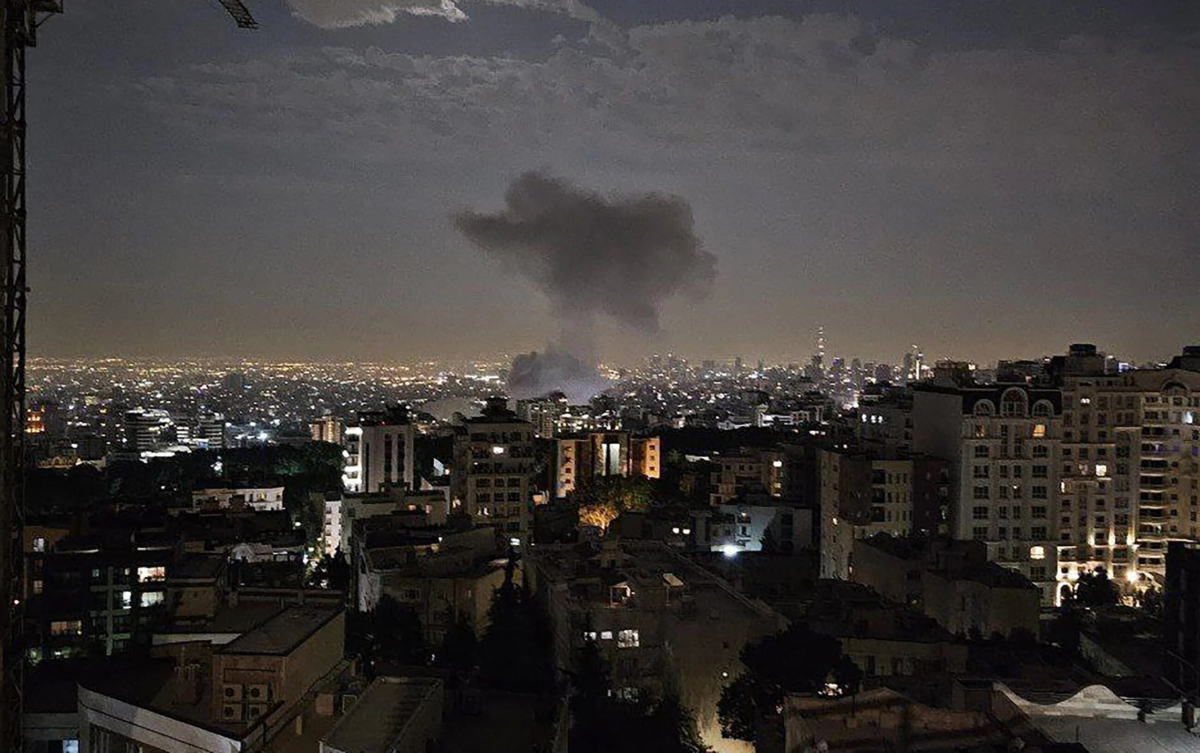
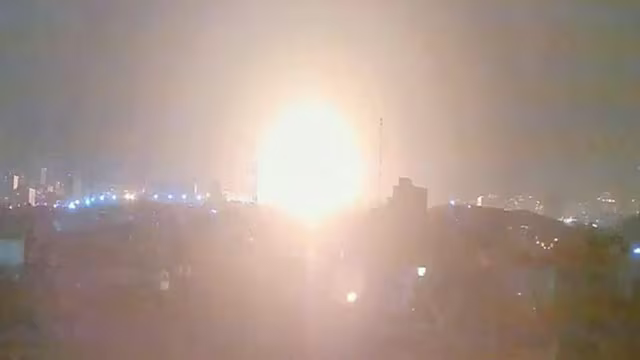
TEHRAN — Israel launched a powerful and wide-ranging military assault on Iran early Friday, striking more than 100 targets including nuclear facilities and key military posts. The attack, which Israel says was aimed at stopping Iran’s nuclear ambitions, has left Tehran reeling and promising fierce revenge.
Among the dead are some of Iran’s most senior defence figures: the head of Iran’s Revolutionary Guards, General Hossein Salami, the armed forces Chief of Staff, Mohammad Bagheri, and several leading nuclear scientists. Iranian state media also reported civilian deaths after residential buildings in Tehran were hit.
Iran’s Supreme Leader Ayatollah Ali Khamenei condemned the attack and warned Israel would face a “bitter and painful” reckoning.
In response, Iran launched 100 drones toward Israel. The Israeli military claimed it was intercepting them and said further retaliation could happen “any minute.”
“We’ve taken out the heart of their nuclear enrichment programme,” said Israeli Prime Minister Benjamin Netanyahu in a televised address. He called the strikes “very successful” and hinted that the operation would continue “for as many days as it takes.”
The main target appeared to be Iran’s nuclear facility in Natanz, long suspected by Western powers of being central to Iran’s pursuit of nuclear weapons something Iran has always denied.
Civilian Fear, Airspace Frozen
As dawn broke over Tehran, smoke still hung in the air. Emergency workers scrambled through rubble in residential districts hit by Israeli warplanes. Women and children were among the dead, according to reports by Iran’s Press TV.
Air travel was brought to a standstill. Tehran’s Imam Khomeini International Airport was shut down, and neighbouring Iraq closed its own airspace, suspending all flights. Israel, too, declared a state of emergency and closed its skies, bracing for incoming strikes.
“Following the State of Israel’s preemptive strike against Iran, a missile and drone attack against the civilian population is expected in the immediate future,” said Israeli Defence Minister Israel Katz.
Trump’s Warning and the Global Fallout
The attack comes just days after former US President Donald Trump warned of a possible “massive conflict” in the region. In an interview with Fox News, Trump revealed he had prior knowledge of the Israeli strikes.
“I don’t want them going in, because I think it would blow the deal,” he said, referring to ongoing talks aimed at reviving a nuclear agreement with Iran. “Might help it actually, but it also could blow it.”
He added firmly, “Tehran cannot have a nuclear bomb.”
The White House, meanwhile, has insisted the United States was not involved in the strikes. But Tehran isn’t buying it.
“This operation could not have taken place without the green light from Washington,” said Iran’s Foreign Ministry, warning that the US would be held “responsible for the consequences.”
Washington’s new Secretary of State, Marco Rubio, pushed back. “Let me be clear: Iran should not target US interests or personnel,” he said. “We are not part of this operation.”
Economic Shockwaves
Oil prices spiked by 12 percent on news of the strikes. Global stock markets tumbled amid fears of a broader regional war. Airlines began rerouting flights to avoid Middle Eastern airspace.
Trump also confirmed that the US was drawing down diplomatic staff from Middle East missions, citing threats from Iran.
Iran’s Defence Minister Aziz Nasirzadeh had earlier warned that “all US bases are within our reach… we will target them without hesitation.”
A Deal in Jeopardy?
Before the attack, hopes were high that the US and Iran might return to the negotiating table in Oman this Sunday to resume talks on a nuclear deal. That now looks uncertain.
Still, Trump held out hope. “We’re still looking to get back to negotiations,” he said. “It’s not off the table.”
The International Atomic Energy Agency (IAEA) confirmed that Natanz was among the facilities hit and said it was closely monitoring radiation levels and had contacted its inspectors in Iran.
Long-Standing Tensions Boil Over
Tensions between Israel and Iran have simmered for decades, but direct strikes between the two nations have been rare until now.
This escalation follows the deadly October 7, 2023 Hamas-led assault on Israel, which Tel Aviv blames squarely on Iran’s support. Since then, the two powers have exchanged open fire, including drone and missile attacks.
While Iran insists its nuclear ambitions are peaceful, Israel and many Western countries say otherwise. Just this week, the IAEA censured Iran for failing to meet its obligations. In response, Iran pledged to build a new enrichment facility at a secure location.
Iran’s nuclear chief, Mohammad Eslami, called the resolution “extremist” and accused Israel of manipulating the global nuclear watchdog.
Iran currently enriches uranium to 60 percent—well beyond the 3.67 percent limit under the 2015 deal and edging closer to the 90 percent purity needed for nuclear weapons.
As Friday’s events unfolded, the world watched anxiously. What happens next could shape the future of the Middle East and global security for years to come.
About the Author