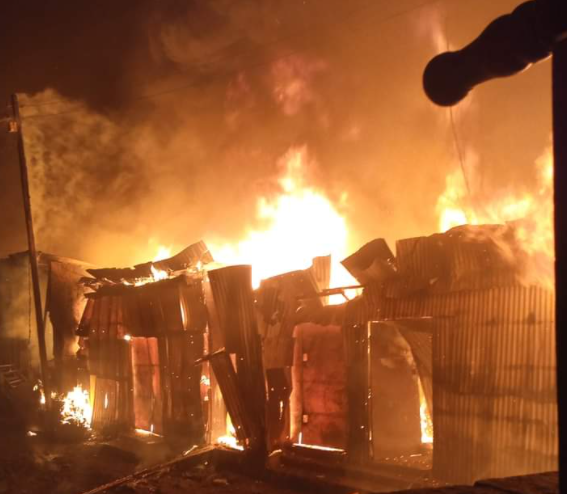
NAIROBI — For the third time in as many months, traders at Nairobi’s Gikomba Market awoke to flames and devastation. A fire broke out at around 3 a.m. on Saturday, reducing dozens of stalls in the footwear section to ashes and reigniting long-standing questions about safety, sabotage, and accountability.
According to traders and early witnesses, the blaze erupted near Lamu Road in Pumwani, Majengo, and spread swiftly through the tightly packed market stalls. Videos shared online showed towering flames lighting the dawn sky, while thick smoke billowed over the city.
By daybreak, charred shoes and burnt iron sheets lay strewn across what was once a thriving commercial hub.
“We’re Back to Zero”
“Everything is gone,” said Hussein Omar, a footwear trader who has worked at Gikomba for over a decade. “All my stock, all my savings reduced to ashes in a few hours. We’re back to zero again.”
Local emergency services and volunteers rushed to the scene. Kamukunji MP Yusuf Hassan confirmed the fire and praised the firefighters’ efforts, though he expressed concern over the frequency of such incidents.
“We appreciate the quick response,” Hassan said. “But we cannot keep treating these fires as isolated events. There must be a deeper investigation into why this keeps happening.”
Police confirmed that no one was injured, but the financial loss is substantial estimates millions of shillings worth of stock and infrastructure were destroyed.
A Pattern Too Familiar
Saturday’s blaze is the latest in a troubling pattern. A fire on April 1 gutted the Kwa Mbao section of the same market, also at 3 a.m. That incident, in turn, came just a month after a similar fire in the same area. The regularity has left traders and residents asking whether these are mere accidents or something more sinister.
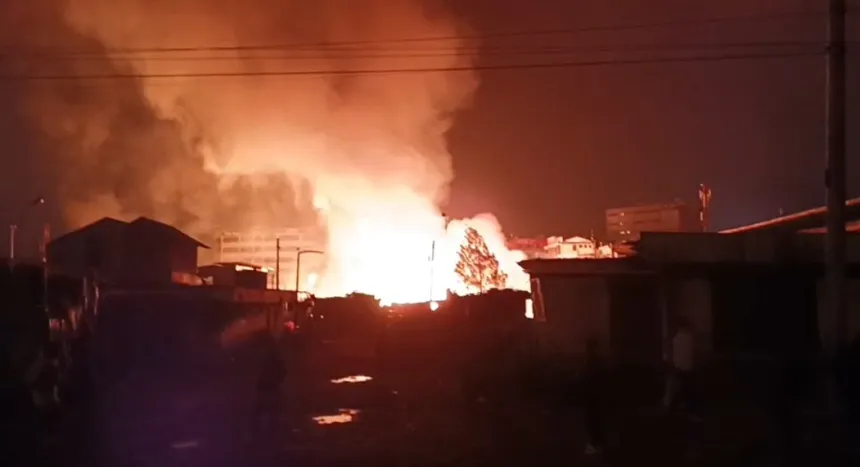
Many traders have long suspected foul play. Some believe competitors or land cartels are behind the fires, using them as a tool to drive out established sellers or disrupt operations.
“These fires are not natural,” said Mary Njeri, another trader affected by the blaze. “It happens too often, and always at the same hour. Someone wants us out.”
No formal link to arson has been established, but the suspicions are widespread and persistent.
Government Promises Action
The government has acknowledged the concerns. On April 9, Deputy President Kithure Kindiki called for a full investigation into the market fires plaguing Nairobi, including those at Gikomba and Toi Market.
“The government has instructed relevant agencies to investigate the cause of the frequent infernos in markets within Nairobi City County,” read a statement from Kindiki’s office. “We want long-term solutions that will protect traders’ livelihoods.”
So far, no findings from those investigations have been made public.
Gikomba Market, known for its second-hand clothing and shoes, remains one of the city’s busiest and most congested commercial areas. Its sprawling layout and patchwork electricity connections have made it particularly vulnerable to fire.
But for many traders, the repeated losses have taken a psychological toll as well.
“You rebuild, you restock, and then it burns again,” said Omar. “We need more than condolences. We need answers and we need change.”
As bulldozers cleared smouldering debris on Saturday afternoon, the mood was sombre. Traders huddled in small groups, some salvaging unburnt items, others simply staring at what remained of their businesses.
In Gikomba, fire has become an all-too-familiar foe. The question many are now asking is whether anyone will finally be held to account.
About the Author