

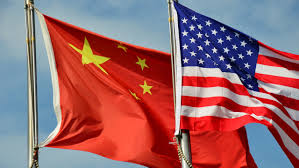
GENEVA — For the first time since Washington imposed a new round of tariffs on Chinese goods last month, senior U.S. and Chinese officials sat down for face-to-face talks in neutral territory.
The high-level meeting, held in Geneva on 10 May, marked a cautious but significant step in efforts to ease tensions between the world’s two largest economies. According to a joint statement, both sides agreed to roll back a substantial share of their respective tariffs 91% to be exact and to pause the implementation of further duties.
The outcome was met with a rare note of optimism.
“This progress is important not just for the U.S. and China, but for the rest of the world,” said Ngozi Okonjo-Iweala, Director-General of the World Trade Organization. “A stable relationship between the two powers is essential for global economic recovery.”
But while the tone in Geneva was markedly more diplomatic than in recent months, the road ahead is far from smooth.
Pressure and Pushback
The talks came just weeks after the Biden administration hiked tariffs on a range of Chinese imports, citing unfair trade practices and intellectual property violations. Beijing swiftly responded with countermeasures.
Both sides, locked in a cycle of economic retaliation, found themselves under growing pressure from global markets and domestic industries to ease tensions.
Following the announcement of partial tariff relief, markets responded positively. The Shanghai and New York stock exchanges both posted gains, and analysts welcomed what they called a “cooling gesture.” Yet few believe the move signals an end to the rivalry.
“This is a tactical pause, not a resolution,” said Dr. Daniel Kwame, a Nairobi-based economist and trade consultant. “We’ve seen temporary de-escalations before. The challenge is converting these moments into longer-term stability.”
Establishing a Dialogue Mechanism
One concrete outcome of the meeting was the creation of a bilateral consultation mechanism to address ongoing economic concerns. Officials say this will provide a formal channel for continued dialogue, avoiding the sudden flare-ups that have defined the relationship in recent years.
The Chinese delegation described the talks as “candid and constructive,” while U.S. representatives stressed the need for “fairness, accountability, and transparency in trade relations.”
Beijing’s Broader Message
In a follow-up opinion piece, Guo Haiyan, China’s ambassador to Kenya, framed the talks as a validation of Beijing’s long-standing position: that dialogue not coercion is the only path to fair trade.
“Any attempt at unilateral pressure only complicates matters,” Ambassador Guo wrote. “China will never yield to coercion, but we are always open to dialogue based on mutual respect.”
She also used the moment to underline China’s support for the Global South, including Kenya, noting that “development and revitalisation are our inherent rights.”
Analysts say the Geneva meeting offered China an opportunity to reassert its commitment to multilateralism, amid what it sees as increasing U.S. protectionism.
Still a Long Road Ahead
Despite the progress, there is no illusion in either Beijing or Washington that the underlying disputes over technology, supply chains, and geopolitical influence have been resolved.
“The talks may lower the temperature for now, but structural tensions remain,” said Dr. Stella Wanjiku, an international relations lecturer at the University of Nairobi. “Neither side has changed its worldview.”
She warned that political shifts in the U.S., especially with an election on the horizon, could make future negotiations unpredictable.
Indeed, China’s officials have repeatedly voiced concern about the volatility of U.S. policy. In their words, consistency not just goodwill is key.
What This Means for Africa
Kenya, and much of Africa, has often found itself caught in the crossfire of global power plays. From supply chain disruptions to investment uncertainty, the continent bears a disproportionate share of the fallout.
There is hope that improved U.S.–China dialogue could ease some of that pressure.
“If they stabilise, we all benefit,” said Kwame. “Kenya needs both partners. A return to calm allows us to focus on our own development priorities.”
Outlook
For now, the Geneva talks have offered a moment of calm and perhaps a sliver of hope. But in the shadows of that diplomatic handshake, deeper rivalries still simmer.
Both Washington and Beijing have agreed to keep talking. Whether those conversations produce lasting results remains an open question.
About the Author